Planning for your procedure? The FUE hair transplant recovery timeline can feel mysterious until you know what to expect. In this guide, FUEsion Hair Clinics walks you through what typically happens after FUE (Follicular Unit Extraction) surgery—week by week, month by month—so you can recover with confidence, protect your grafts, and know when to contact our clinic.
Note: Individual healing varies based on graft number, hair characteristics, surgical technique, your scalp health, and adherence to post-op instructions.
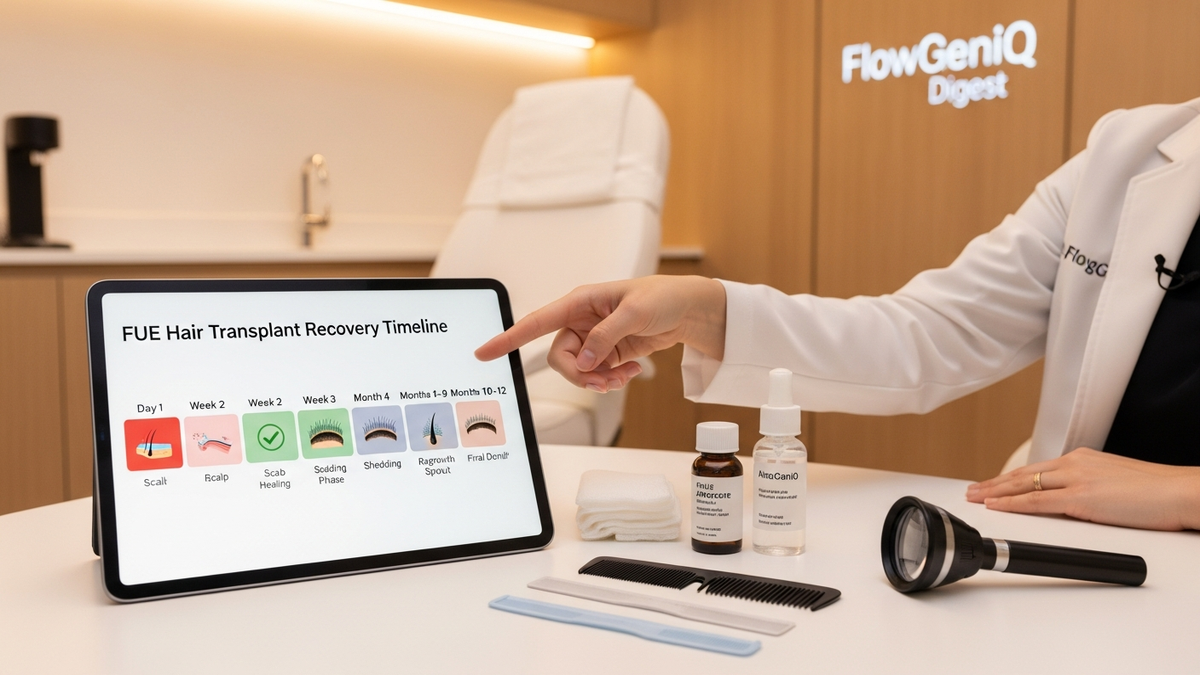
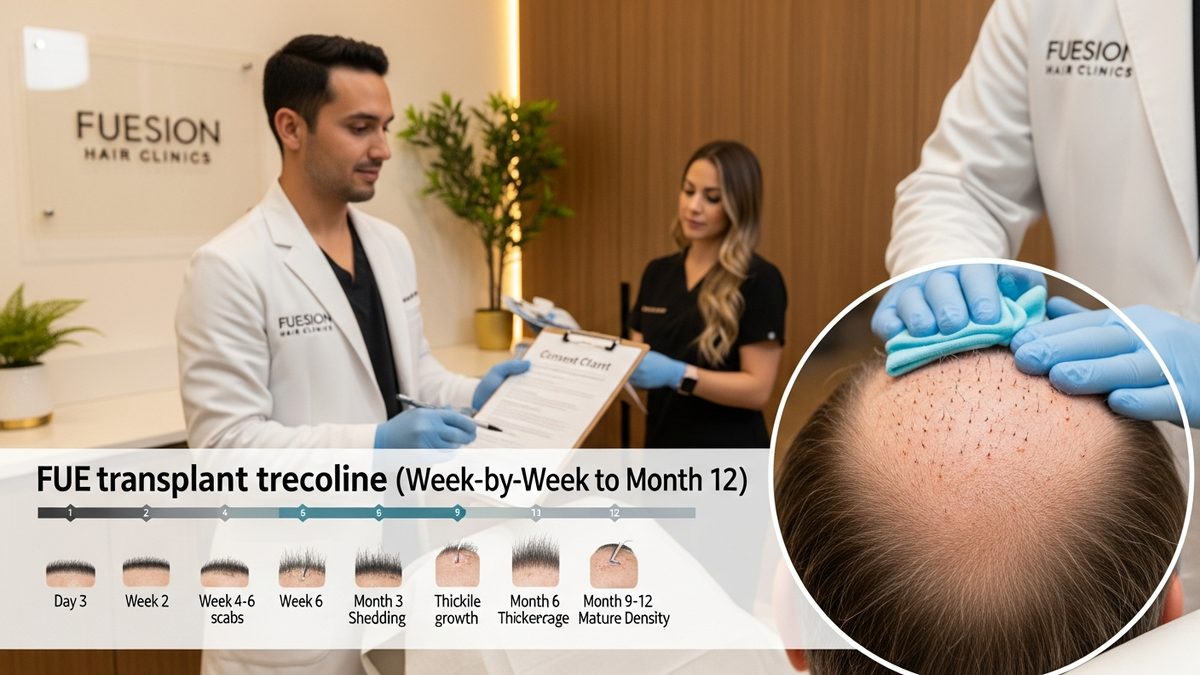
FUE Hair Transplant Recovery Timeline at a Glance (Day 1 to Month 12)
Most patients experience predictable phases after FUE: early inflammation and scabbing, shedding of transplanted hairs, then gradual regrowth. The timeline below is designed to help you interpret normal healing signals versus potential complications.
- Days 1–7: scabbing, redness, tightness; grafts stabilize
- Week 2–3: scabs loosen and shed; swelling typically settles
- Week 4–8: “shock loss” and thinning can occur; scalp feels calmer
- Month 3–4: early regrowth may appear; hair texture changes
- Month 5–6: more visible density; gradual maturation
- Month 7–9: continued thickening and coverage improvement
- Month 10–12: best assessment window for final results (not always fully complete)
For personalized planning, use this guide as a baseline and follow the specific instructions provided by your surgical team at FUEsion Hair Clinics.
Days 1–7: The Early Healing Phase (Stability, Scabs, and Comfort)
Day 1 (Immediately After Surgery)
- Expected: redness of the treated area, mild swelling (sometimes around forehead/eyes), tight or itchy sensation, and small pinpoint bleeding or oozing.
- Grafts: newly transplanted follicular units are placed and begin stabilizing in the recipient sites.
- What you should do: follow your clinic’s cleaning and medication plan exactly; avoid touching, scratching, or rubbing the scalp.
- What to avoid: strenuous activity, heat exposure, and bending over for extended periods.
Days 2–3
- Expected: scabs begin forming over recipient sites; redness may persist; swelling may peak and then start to improve.
- Common sensations: mild burning/itching, dryness, and “pulling” feeling.
- Care focus: gentle cleansing as directed, keeping the scalp clean and dry between washes (if instructed), and sleeping with recommended head elevation.
Days 4–5
- Expected: scabs thicken slightly then begin to loosen; redness gradually fades for many patients.
- Common side effect: temporary numbness or sensitivity in donor/recipient areas.
- When to contact the clinic: if you notice rapidly worsening swelling, spreading redness, or persistent bleeding that does not follow post-op guidance.
Days 6–7
- Expected: scabs remain in place; itching may increase as healing progresses.
- Do: keep nails short and avoid scratching; continue prescribed medications.
- Don’t: pick at scabs—this can dislodge grafts and affect yield.
Week 2–3: Scab Shedding and Settling of Inflammation
Week 2 (Days 8–14)
- Expected: scabs soften and start to shed naturally during and after gentle wash routines.
- Skin appearance: you may see a “dry, crusty” look transitioning to smoother scalp texture.
- Hair shedding: transplanted hairs are not always immediately visible as shed; however, hair may loosen from follicles during this phase.
- Care focus: follow the clinic’s shampoo schedule and technique; avoid aggressive rubbing or high-pressure water.
Week 3 (Days 15–21)
- Expected: most scabs are gone; redness typically continues improving.
- Common side effects: dryness, mild flaking, and occasional follicle-level tenderness.
- Normal variability: some patients heal faster, others slower—especially if they have a sensitive scalp, seborrheic tendencies, or more grafts.
Contact FUEsion Hair Clinics if: you develop signs of infection (increasing warmth, pus, fever), severe uncontrolled pain, or a sudden change such as marked swelling after it had begun improving.
Week 4–8: Shock Loss and “Quiet” Growth
Week 4 (Days 22–28)
- Expected: scalp comfort improves; the transplanted hairs may begin to shed more noticeably.
- Important concept: this is often part of shock loss, where transplanted hairs shed but follicles remain alive and can regrow.
- What it can look like: stubble-like shedding, increased hair fall during washing, or visible empty shafts.
Week 5–6
- Expected: shedding may continue; density can temporarily look worse before it improves.
- Psychological note: many patients worry at this stage—this is why setting expectations in your FUE hair transplant recovery timeline matters.
- Care focus: maintain gentle cleansing and avoid heat/UV exposure to the scalp.
Week 7–8
- Expected: shedding often starts to slow; the scalp remains in a recovery mode.
- Hair follicles: follicles enter a regrowth cycle; early growth may begin beneath the surface.
- When to reassess: if you’re not following medications or if you have questions about adding supportive therapies, schedule a check-in with your clinic team.
Month 3–4: Early Regrowth Begins
Month 3
- Expected: fine, thin hairs may start emerging in recipient areas.
- Texture changes: new hair may look lighter or different in curl pattern or thickness at first.
- What you can do: continue the regimen your surgeon recommended (and avoid starting new products without approval).
Month 4
- Expected: more visible growth; hairs may begin thickening gradually.
- Coverage: some patients see early cosmetic improvement, especially in the hairline or crown areas where baseline contrast is favorable.
- Photo tracking: consistent lighting and angles can help you objectively measure progress.
Month 5–6: Density Builds and Hair Matures
Month 5
- Expected: continued thickening and lengthening of new hairs.
- Styling: hair may become easier to style as it gains strength and volume.
- Supportive care: many patients benefit from ongoing scalp health routines (gentle cleansing, appropriate anti-inflammatory/topical support if prescribed).
Month 6
- Expected: noticeable improvement in density and coverage for many patients.
- Variability: some patients see faster gains; others progress more gradually depending on baseline hair caliber, graft survival, and growth cycle timing.
- Medication integration: if you’re using medical hair loss treatments (e.g., finasteride/minoxidil—if prescribed), this stage is often when you may see more synergistic benefit.
Month 7–9: Visible Coverage Improvements Continue
Month 7–8
- Expected: hair continues to mature; strands often look thicker and more natural.
- Scalp feel: typically stable with fewer postoperative sensitivities.
- Ongoing evaluation: your clinic may compare progress photos and assess whether additional supportive strategies are appropriate.
Month 9
- Expected: more consistent density; crown regrowth can be especially encouraging around this time for many patients.
- Realistic expectation: even at 9 months, hair remodeling and thickness gains may still be ongoing.
Month 10–12: Final Result Assessment Window
Month 10
- Expected: continued thickening and improved blending with surrounding native hair.
- Common observation: patients often notice better coverage from different angles and under varied lighting.
Month 11
- Expected: incremental gains; hair shaft caliber may continue to improve.
- When to discuss next steps: if you’re considering additional grafting, optimizing medical therapy, or refining the hairline/crown distribution, this is a strong time to review options.
Month 12
- Expected: the best overall assessment for many patients; results are often close to final.
- Important: “final” doesn’t always mean perfect—some patients continue subtle improvements beyond 12 months.
- Long-term maintenance: ongoing hair loss prevention strategies can help protect your native and transplanted follicles over time.
Common Side Effects After FUE (and When to Contact the Clinic)
Most post-op effects are temporary. Still, knowing what’s normal—and what’s not—helps you recover safely.
Common and usually temporary
- Redness and mild swelling: typically improves within the first 1–2 weeks.
- Scabbing and crusting: part of normal healing; should shed naturally—never pick.
- Itching, tightness, dryness: often peaks around scab formation and loosening.
- Temporary numbness or sensitivity: may persist for weeks.
- Shock loss: shedding of transplanted hairs around weeks 4–8; follicles remain.
- Small bumps: can occur from healing follicles; usually resolve with time and proper care.
Seek medical guidance promptly if you notice
- Signs of infection: increasing pain, warmth, pus, fever, or rapidly spreading redness.
- Uncontrolled bleeding: bleeding that doesn’t follow your post-op instructions.
- Severe or worsening swelling: especially if it appears after initial improvement.
- Persistent severe headache or systemic symptoms: contact your clinic or a physician urgently.
Pro tip: If you’re unsure whether a symptom is within expected healing, send a photo and message your care team at FUEsion Hair Clinics. Early guidance can prevent minor issues from becoming bigger problems.
How to Support Your FUE Recovery (What Helps, What Hurts)
What helps
- Follow your wash and aftercare schedule exactly as prescribed.
- Protect grafts from friction (avoid rubbing, hats that press, and aggressive towel drying).
- Sleep with head elevation if instructed—this can reduce swelling.
- Take medications as directed (antibiotics/anti-inflammatories if prescribed).
- Keep nutrition consistent: hydration and adequate protein support tissue repair.
- Track progress with photos using consistent lighting and angles.
What can hurt graft survival
- Picking scabs or scratching itchy areas.
- Smoking or nicotine products (can impair circulation and healing).
- Heat exposure too soon (saunas, hot tubs) and intense UV exposure.
- Heavy exercise early on (follow your surgeon’s timeline).
- Starting new products without approval (especially strong actives or exfoliants).
Many patients also ask about advanced supportive therapies. Depending on your goals and medical history, your clinic may discuss options such as low-level laser therapy, PRP/PRP-inspired protocols, or medication-based hair loss stabilization—always as part of a personalized plan.
Personalized Recovery Support: Surgical Results + Ongoing Hair Health
A successful outcome is not only about the procedure—it’s also about long-term hair health. At FUEsion Hair Clinics, many patients benefit from combining surgical restoration with evidence-aligned stabilization strategies and scalp support.
How additional treatments may fit (examples)
- Medical hair loss therapy (when prescribed): to help slow ongoing miniaturization of native hair.
- Low-level laser therapy: can be used as supportive treatment for some patients to encourage follicular activity.
- Scalp health routines: gentle cleansing, anti-inflammatory support, and barrier-friendly skincare may improve comfort and reduce irritation.
- Genetically-informed wellness support (where available): individualized protocols may help optimize tolerability and consistency of supportive regimens.
Important: Any medication, supplement, or device should be discussed with your clinician—especially if you have underlying medical conditions or take other medications.
FAQ: FUE Hair Transplant Recovery Timeline
1) Is the shedding at 4–8 weeks normal?
Yes. Many patients experience shock loss during weeks 4–8 as transplanted hairs shed. This does not necessarily mean the follicles failed; regrowth typically begins later (often around months 3–4).
2) When can I wash my scalp normally after an FUE procedure?
Your surgeon will provide a specific washing schedule. In general, you’ll begin gentle cleansing early and gradually increase routine as scabs loosen and fall away naturally. Avoid aggressive rubbing or high-pressure water.
3) What are red flags that mean I should contact the clinic?
Contact your clinic promptly for symptoms such as spreading redness, increasing warmth, pus, fever, severe worsening swelling, uncontrolled bleeding, or severe pain that doesn’t match typical healing.
4) When will I see my first real results?
Many patients see early signs of growth around month 3–4, with more noticeable density improvements by month 5–6. The best overall assessment is often around month 10–12.
5) Will I need more than one procedure?
Some patients achieve their goals with one FUE procedure, while others may benefit from staged sessions—particularly for advanced hair loss patterns, crown coverage, or to refine density and distribution. Your clinic can discuss your individualized plan after early healing and at follow-up assessments.
Ready for Your Personalized FUE Recovery Plan?
Your FUE hair transplant recovery timeline should feel clear—not stressful. If you’re considering FUE or you’re already scheduled, the best next step is a consultation so we can review your goals, scalp/hair-loss pattern, and postoperative strategy.
Schedule a consultation with FUEsion Hair Clinics to discuss your procedure plan, expected milestones, and the support options that may help you optimize regrowth and long-term results.
Medical Information Disclaimer
This content is provided for general educational purposes only and reflects the clinical experience and protocols followed at FUEsion Hair Clinics. It is not a substitute for professional medical advice, diagnosis, or treatment. Patients are advised to consult a qualified hair restoration specialist for personalized recommendations.