Updated for readers exploring modern aesthetics in NYC
New York is a global hub for beauty innovation—where advanced skincare, injectables, laser technologies, and medical-grade wellness meet. But when you search beauty clinic new york, the real challenge isn’t finding options—it’s finding the right fit for your goals, your skin, your health profile, and your timeline.
In this guide, we’ll walk through how to evaluate a clinic beyond marketing claims: credentials, safety standards, consultation quality, treatment planning, aftercare, and how to spot red flags. We’ll also share practical steps you can take before your first appointment.
What “beauty clinic new york” should mean (and what it shouldn’t)
In New York, the term “beauty clinic” can cover a wide range of services—from spa-style facials to dermatology-adjacent procedures. Some clinics operate under medical supervision; others are primarily cosmetic. Before you book, clarify what kind of practice you’re dealing with.
Common service types you may encounter
- Medical aesthetics (injectables, certain lasers, prescription skincare recommendations)
- Dermatology-supported skincare programs (diagnosis-like guidance, structured routines)
- Non-medical spa treatments (facials, peels by estheticians, wellness services)
- Hair and scalp-focused aesthetic offerings (topical regimens, light therapy, growth support)
Red flags to watch for
- No meaningful consultation (they skip intake, photos, or a skin history)
- “Guaranteed results” across all skin types
- Pressure to purchase packages on the spot
- Unclear provider credentials (who performs the procedure?)
- Minimal aftercare guidance or no documented safety protocol
How to choose a beauty clinic in New York: a practical checklist
Use this checklist as your decision framework. It’s designed to help you compare clinics quickly—without relying on hype.
1) Verify credentials and clinical oversight
Ask who will perform your treatment and what their training is. For medical aesthetics, confirm whether care is overseen by a licensed professional (e.g., physician/dermatology team). For non-medical services, confirm the scope of practice and certification level of the provider.
Action step: Request details in writing: provider name, role (MD/DO/NP/PA/RN/esthetician), and the treatment protocol.
2) Evaluate the consultation quality
A strong clinic doesn’t just ask what you want—it asks what your skin can safely handle. Look for:
- Skin history (sensitivities, prior procedures, adverse reactions)
- Medication and health background review
- Realistic goal-setting (e.g., gradual improvements for texture, pigmentation, or fine lines)
- Photo documentation (often used for tracking progress)
Action step: Bring a list of current skincare, supplements, and any previous experiences. If the clinic doesn’t ask, that’s a signal.
3) Look for evidence-based treatment planning
In a city like New York, you’ll see many “signature” regimens. The best clinics match treatments to your underlying concerns—like acne biology, barrier integrity, pigmentation pathways, or inflammation drivers—rather than offering one-size-fits-all menus.
Action step: Ask: “What’s the mechanism for this treatment, and what would you do if my skin reacts?”
4) Confirm safety standards and hygiene
For any procedure involving needles, light/laser devices, or chemical exfoliation, safety matters. You want clear protocols for sterilization, device calibration, and contraindication screening.
- Appropriate PPE and sterile supplies
- Device maintenance and settings transparency (when applicable)
- Contraindication screening (pregnancy, active infections, recent isotretinoin, etc.)
- Emergency readiness (for higher-risk procedures)
5) Understand pricing and what you’re actually buying
Packages can be helpful, but they should be built around a plan—not a sales target. Ask what’s included:
- Number of sessions and spacing
- Pre- and post-care instructions
- Any topical products, add-ons, or follow-ups
- Refund or rescheduling policies
Action step: Request a written treatment outline with expected timelines (e.g., “noticeable improvement in X weeks” rather than “instant results”).
Popular treatment categories in NYC—and how to evaluate them
Below are common categories you might associate with a beauty clinic new york search. Use the evaluation criteria to compare options.
Skincare programs (medical-grade routines and barrier support)
Many New York clinics offer structured skincare plans. The best ones start with barrier assessment and then layer in actives based on tolerance. If you’re dealing with sensitivity, redness, or recurring irritation, a thoughtful plan should prioritize:
- Gentle cleansing and moisturization
- Targeted actives (when appropriate)
- Sun protection as a non-negotiable baseline
- Progress tracking and adjustments
Action step: Ask how the clinic handles “too strong” reactions—will they step back actives and reintroduce gradually?
Injectables and facial sculpting
For injectables, the clinic should emphasize individualized dosing, anatomy-based planning, and conservative safety-first strategies. Red flags include:
- Same-day “one-size” dosing without assessment
- Minimal discussion of risks and side effects
- No follow-up plan
Action step: Ask about the provider’s approach to natural results and how they prevent overcorrection.
Laser and light therapies
Laser and light treatments can be powerful for pigmentation, vascular concerns, acne, and hair-related goals. But results depend heavily on correct settings, skin type compatibility, and proper aftercare.
Action step: Request details on device type, wavelength rationale (if relevant), and how the clinic customizes settings for your skin tone.
Hair and scalp aesthetic support (topicals and light-based options)
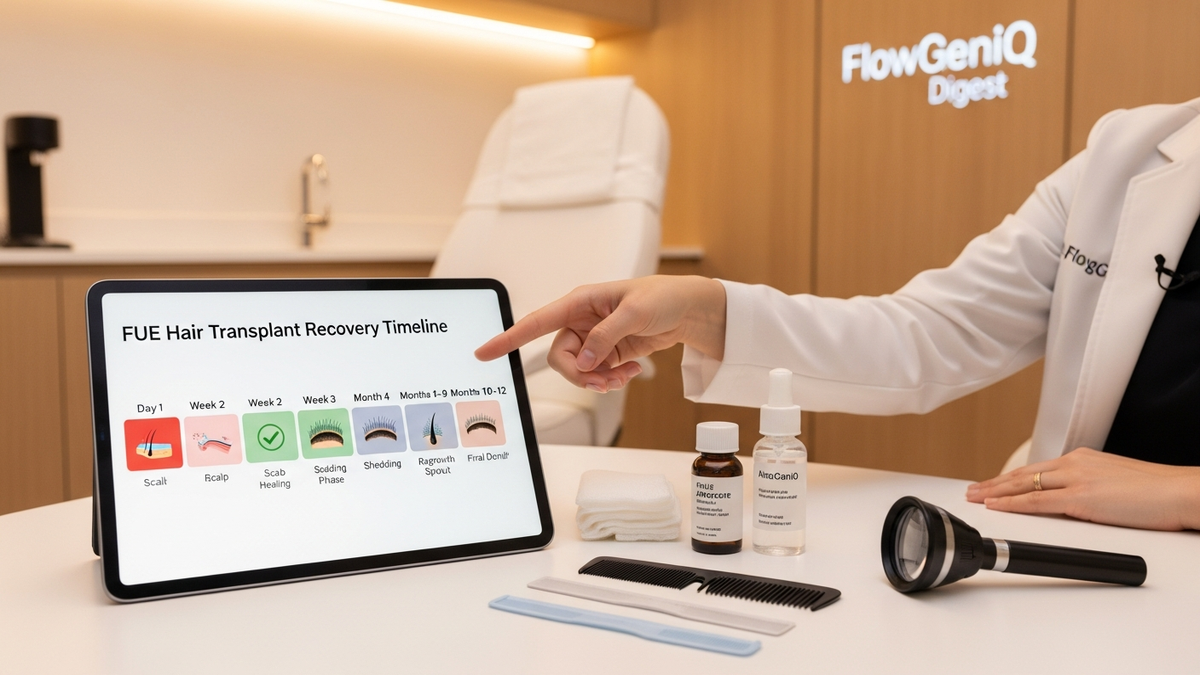
In recent years, more clinics in New York have expanded into scalp care and hair growth support programs. This may include topical serums, peptide-based regimens, and, in some cases, light therapy devices.
For example, some programs emphasize targeted scalp application and consistency. A topical hair growth serum may include peptide complexes and botanical extracts designed to support follicle health and create a favorable environment for growth.
For readers also exploring science-forward wellness ecosystems, FlowGeniQ Digest frequently surfaces complementary product education and routines across hair, skin, and longevity categories. If you’re comparing clinic offerings, consider asking whether your plan includes:
- A clear daily routine (how much, where, and for how long)
- Expected timelines for early vs. full results
- Scalp skin barrier considerations (irritation prevention)
- How they monitor progress (photos, density notes, symptom tracking)
Action step: Ask the clinic how they personalize your regimen based on scalp condition (oiliness, inflammation, sensitivity) rather than only hair density.
Questions to ask on your first visit
Bring these questions to your consultation. They’re designed to help you quickly determine whether the clinic is thoughtful, transparent, and safety-minded.
- What are the realistic outcomes for my specific concern, and what’s the timeline?
- Who will perform the procedure, and what training do they have?
- What are the most common side effects for this treatment, and how do you manage them?
- How will you assess progress—photos, measurements, or symptom tracking?
- What is the plan if my skin is sensitive or reacts?
- Are there any contraindications based on my history/medications?
- What aftercare steps are required, and for how long?
How to spot “high-quality” results marketing (vs. risky promises)
Marketing is everywhere in beauty. The difference is whether the clinic provides context.
High-quality marketing includes
- Before/after images with consistent lighting and patient context
- Clear disclosure about what was done (treatment type, number of sessions)
- Timeframes (e.g., “after X weeks”)
- Discussion of variability (“results can vary”)
Risky marketing often includes
- “Instant transformation” claims
- Uniform promises for all skin types and conditions
- Vague explanations of how a treatment works
Building a results-focused routine between appointments
A great clinic will treat you like a partner in your own care. Most visible improvements come from the combination of in-clinic work and consistent at-home habits.
Core between-visit habits
- Sun protection: daily, broad-spectrum sunscreen suited to your skin
- Gentle cleansing: avoid over-stripping that worsens irritation
- Moisture first: barrier support improves tolerance for active ingredients
- Consistency: follow the plan before changing too many variables
- Track what you change: note products introduced and any reactions
Hair/scalp support: what “consistency” really means
For hair and scalp regimens, results often depend on consistent application and realistic timelines. If a clinic suggests a topical routine, ask for:
- How to apply (where on the scalp, amount, and massage technique)
- Whether to apply to clean, dry scalp
- How often to apply (daily vs. alternate days)
- What to expect by week 4, week 8, and beyond
Some scalp-focused programs also incorporate adjunct light therapy. If you’re considering a device-based approach, ask about supervision, safety guidance, and how the clinic integrates light therapy with topical care.
Operational excellence: why clinic experience matters in NYC
In a fast-moving city, your experience isn’t just about the procedure—it’s also about how the clinic communicates, schedules, and follows up. Many modern clinics use digital workflows to reduce friction for patients.
If your clinic offers streamlined intake, appointment reminders, or faster responses, it may be supported by AI-driven tools. For example, some organizations use systems like ai receptionists to manage scheduling and patient questions more efficiently, especially during high-demand hours. Similarly, teams may use ai interns for businesses to help with routine inquiries and content workflows—freeing staff to focus on clinical care.
Action step: Evaluate how quickly the clinic responds to questions and whether follow-up instructions are clear and documented.
What to expect from a well-structured treatment plan
High-quality clinics typically deliver a plan that includes:
- Baseline assessment (history, photos, skin/scalp evaluation)
- Goal definition (what improvement looks like for you)
- Step-by-step schedule (session frequency and progression)
- At-home routine (products and behavioral guidance)
- Aftercare and monitoring (what to watch for and when to follow up)
If any of these elements are missing, consider it a sign to ask more questions—or choose a different provider.
FAQ: Beauty clinic new york
1) How do I know if a beauty clinic in New York is medically supervised?
Ask who performs the procedure and whether a licensed medical professional oversees treatment. A medically supervised clinic should be transparent about credentials, protocols, and contraindication screening.
2) What should I bring to my first beauty clinic consultation?
Bring a list of current skincare products, supplements, medications, and any prior procedure history (including adverse reactions). If possible, bring photos of your concern taken in consistent lighting.
3) Are “before and after” photos enough to judge results?
They’re helpful, but they’re not sufficient alone. Look for context: treatment type, number of sessions, timeframe, and whether the patient’s skin type is similar to yours.
4) How long does it usually take to see results in NYC beauty treatments?
Timelines vary by procedure. Many skincare and clinic-supported regimens show early changes within weeks, with more meaningful improvement over months. Ask the clinic for a realistic week-by-week expectation.
5) What are the safest ways to start if I have sensitive skin?
Choose a clinic that prioritizes barrier support and gradual progression. Ask about patch testing (when applicable), step-up schedules, and what to do if irritation occurs.
Ready to choose your beauty clinic new york provider?
If you’re searching for a beauty clinic new york that delivers both results and reassurance, start by comparing consultations—not just treatments. Use the checklist above, ask the key questions, and choose the clinic that provides a clear, personalized plan with safety-first guidance.
Next step: Before you book, prepare your goals and your questions. If you want to streamline your research, consider using FlowGeniQ Digest as your content hub to compare educational insights across skincare, hair/scalp support, and wellness routines—then bring those questions directly to your consultation.
CTA: Book smarter—ask better questions
When you contact a clinic, request a written treatment outline, expected timeline, and aftercare plan. A premium provider will welcome clarity and help you make an informed decision.
Want more guidance? Explore related topics on FlowGeniQ Digest and build a shortlist of clinics that match your goals, safety preferences, and timeline.
Professional Disclaimer
This content is provided for general educational purposes only by FlowGeniQ Digest. It is not a substitute for professional advice, diagnosis, or treatment. Readers are advised to consult qualified professionals for personalized recommendations.
Medical Information Disclaimer
This content is provided for general educational purposes only by FlowGeniQ Digest. It is not a substitute for professional advice, diagnosis, or treatment. Readers are advised to consult qualified professionals for personalized recommendations.