Shopping for a new york beauty clinic can feel exciting—and overwhelming at the same time. Between glossy before-and-after photos, fast-moving booking calendars, and a long list of possible treatments, it’s easy to make decisions based on aesthetics alone. But the best outcomes usually come from a different starting point: choosing the right clinic for your goals, your skin (or hair), your medical history, and your timeline.
In this FlowGeniQ Digest guide, we’ll break down exactly what to look for in a top-tier clinic experience—from credentials and consultation quality to safety protocols, treatment planning, and follow-through. You’ll also find practical questions to ask before you book, plus a FAQ to help you navigate common concerns.
What “New York Beauty Clinic” Should Mean to You (Beyond the Aesthetic)
A true new york beauty clinic is defined by more than services. It’s defined by clinical rigor, transparency, and a patient-first approach. In a city with intense competition and high demand, the difference between “looks good on Instagram” and “works in real life” often comes down to process.
Look for these clinic quality signals
- Medical oversight: Many cosmetic services should be directed or supervised by appropriately licensed professionals.
- Clear treatment rationale: A reputable clinic explains why a specific treatment is recommended—not just what it costs.
- Safety-first protocols: Sterilization standards, contraindication screening, and documented consent.
- Expectation management: Realistic timelines, possible side effects, and what “maintenance” may involve.
- Personalization: Your plan should be based on your features, goals, and risk profile—not a one-size package.
Start With Your Goal: Skin, Hair, Body, or “All of the Above”
Most people begin their search for a new york beauty clinic with a visible goal—clearer skin, smoother texture, reduced pigmentation, or fuller-looking hair. But successful treatment planning starts with a deeper question: What problem are we solving, and why?
Common categories of beauty treatments
- Skin rejuvenation: targeting acne, redness, uneven tone, fine lines, or dryness
- Hair restoration support: addressing thinning, shedding, or scalp conditions
- Body contouring and wellness: supporting energy, metabolism, and appearance-related goals
- Beauty-from-within: nutrition and topical/home-care regimens that complement in-clinic work
Even if your clinic offers a wide menu, you should still expect a focused plan. For example, a hair-thinning concern typically benefits from a multi-pronged approach: scalp health, follicle support, and consistent use of a home regimen alongside any in-office therapies your clinician recommends.
How to Evaluate a New York Beauty Clinic: A Step-by-Step Checklist
Use this checklist to compare clinics efficiently. If a clinic can clearly answer these points, you’re likely in safer hands.
1) Credentials and clinical governance
Ask who performs the procedures and what their licensing/clinical training is. For injectable or higher-risk treatments, confirm that the provider is appropriately qualified and that protocols are documented.
2) Consultation quality (this is where results are built)
A strong consultation should include:
- History review: prior treatments, allergies, medications, and relevant health conditions
- Risk screening: contraindications and realistic safety considerations
- Skin/hair assessment: observation under good lighting, scalp/skin evaluation, and goal alignment
- Plan transparency: what will be done, how often, what to expect, and what alternatives exist
If the consultation feels rushed or the clinic offers only generic packages, that’s a red flag.
3) Treatment planning and realistic timelines
Beauty outcomes don’t happen overnight. Ask the clinic what timeline is typical for your specific goal and which variables can change results (skin type, adherence, hormonal factors, genetics, or baseline severity).
4) Safety and sanitation standards
- Are tools and devices cleaned and sterilized appropriately?
- Is there an established process for consent and aftercare?
- Do they provide guidance for when to contact the clinic post-treatment?
5) Aftercare and follow-up
Ask what support is offered after your appointment. A clinic that provides clear aftercare instructions, follow-up check-ins, and an escalation path if something feels off is more aligned with long-term success.
Popular Services in a New York Beauty Clinic (and What to Ask)
New York beauty clinics may offer an array of services. Below are common categories, along with questions that help you evaluate whether the approach is thoughtful and evidence-minded.
Skin treatments: what “good” sounds like
Whether you’re considering resurfacing, pigmentation support, or redness reduction, a high-quality clinic should discuss:
- Why this method is appropriate for your skin type
- Expected downtime (if any) and how to manage it
- How irritation will be minimized
- How results will be maintained
Actionable tip: Ask how the clinic adjusts plans when skin reacts differently than expected. The best clinics treat variability as normal—not as a failure.
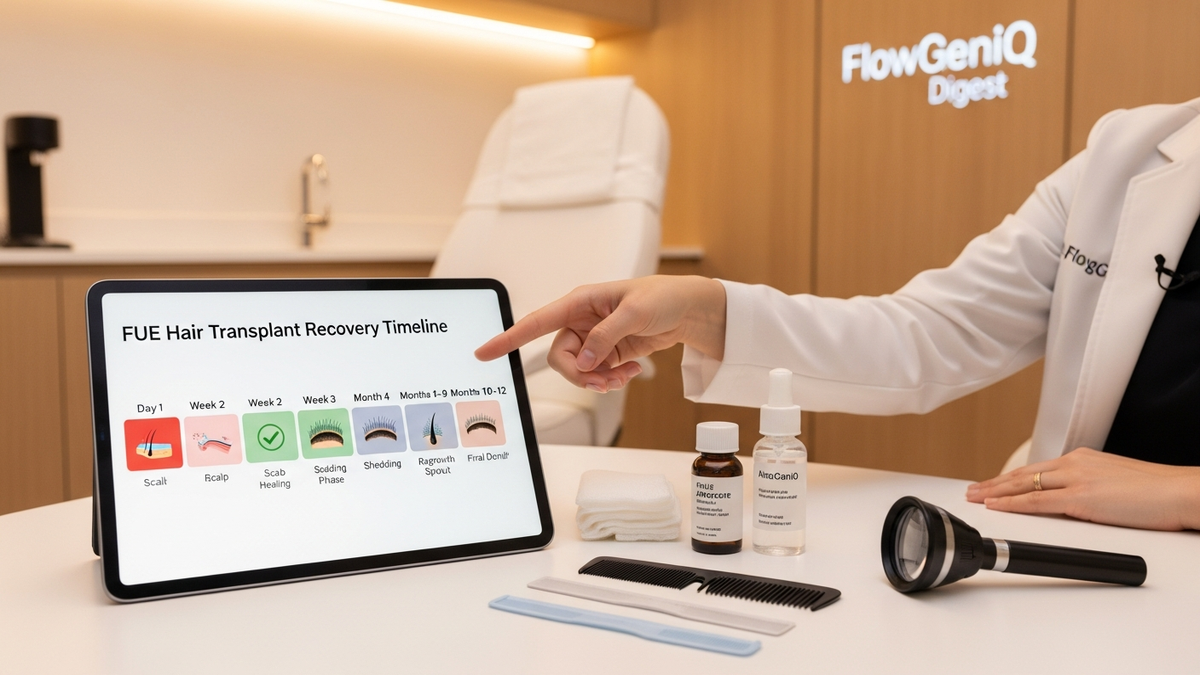
Hair support: scalp health, follicle support, and consistency
For thinning concerns, clinics often recommend a home regimen that supports scalp environment and follicle health. For example, some topical approaches emphasize peptide technology and botanical extracts. While any product should be chosen with professional guidance, the framework matters:
- Targeted scalp application: consistent delivery to the area of concern
- Scalp comfort and environment: support for inflammation-prone or sensitive scalp conditions
- Long-term adherence: hair growth typically requires time and consistency
In FlowGeniQ Digest’s wellness ecosystem, you may see education around topical regimens and adjunct technologies. For instance, a topical hair serum may be designed for external use and consistent daily application to support thinning areas. When reviewing any product or treatment plan, always confirm safety instructions, external-use requirements, and contraindications with a qualified professional.
Laser and light therapy: questions that protect you
Some clinics use laser/light-based devices for scalp and hair support. If you’re evaluating a device-based therapy, ask:
- What wavelengths are used and why?
- What is the typical treatment schedule?
- What side effects are possible?
- How do they track progress (photos, measurements, scalp assessment)?
Actionable tip: Request a clear plan that includes baseline documentation and follow-up checkpoints. Progress tracking is one of the most overlooked quality markers in beauty clinics.
Beauty-from-Within: Nutrition and Supportive Habits
Many people search for a new york beauty clinic for external treatments, but long-term results often depend on internal factors too—sleep, stress, protein intake, hydration, and overall metabolic health. Clinics that take a holistic view tend to ask about lifestyle and wellness habits during consultations.
Protein, collagen, and hydration (how to think about it)
Some wellness-focused programs combine beauty and fitness-oriented nutrition. For example, a dual-purpose protein + collagen approach may be positioned as supporting skin hydration and elasticity while also helping with satiety and lean mass maintenance. If you’re considering any supplement, treat it as adjunct support—not a replacement for medical care.
If you want to explore FlowGeniQ Digest content across wellness categories, you’ll often see structured education that links nutrition, routine, and consistency. For instance, you may encounter product education like:
- Topical scalp support concepts
- Protein + collagen support frameworks
- Metabolism and energy-support education
Important: Individual results vary. Always consult a qualified healthcare provider before starting supplements, especially if you’re pregnant, breastfeeding, managing chronic conditions, or taking medications.
Technology and Clinic Experience: Where AI Can Help (and Where It Shouldn’t)
Today’s clinic experience isn’t only about procedures—it’s also about how you’re supported before and after your appointment. Some clinics use automation and AI tools to improve scheduling and communication. When done well, this can reduce friction and help you get answers faster.
What’s helpful about AI receptionists and scheduling
For example, appointment coordination can be streamlined by ai receptionists—helping patients get answers about availability, prep instructions, and next steps. This is especially valuable in a fast-paced city like New York where schedules fill quickly.
When AI support should be paired with human clinical expertise
Even if AI helps with logistics, clinical decisions should still be made by qualified professionals. If a clinic uses AI to triage or provide medical guidance, ask how escalation works and who ultimately reviews your case.
Similarly, teams may use ai interns for businesses to assist with internal workflows, but your medical safety and treatment plan should remain firmly in the hands of licensed providers.
Red Flags to Avoid When Choosing a New York Beauty Clinic
Most people don’t regret finding the right clinic—they regret not asking enough questions. Here are common red flags to watch for:
- Guaranteed results: No reputable provider can promise identical outcomes.
- Pressure tactics: “Book now” scripts without time for questions are a warning sign.
- Vague medical screening: If your history isn’t reviewed, safety may be compromised.
- Limited aftercare: If you don’t receive clear guidance, complications become harder to manage.
- No documentation: Lack of baseline photos or measurements makes progress tracking difficult.
What a Great Treatment Plan Looks Like (Example Framework)
While every person’s plan is unique, a high-quality new york beauty clinic typically uses a structured framework:
Step 1: Baseline assessment
Clinicians document your starting point (skin/hair condition, scalp/skin concerns, and goal priorities).
Step 2: Risk and eligibility review
Contraindications, sensitivities, and relevant medical history are considered.
Step 3: Customized intervention strategy
The plan may combine in-clinic treatments with supportive home care. The key is that each component has a purpose.
Step 4: Timeline and progress checkpoints
You get a schedule for sessions and follow-ups, plus clear criteria for evaluating improvement.
Step 5: Maintenance and adjustment
As your results evolve, the plan can be refined. The best clinics treat adjustments as part of the process.
Actionable Tips Before You Book Your Appointment
If you want to maximize your chances of a strong outcome, prepare like a pro. Here are practical steps you can take before contacting a new york beauty clinic:
1) Bring a “goal statement”
Write one or two sentences about what you want to change. Include:
- What bothers you most
- When it started
- What you’ve tried already
- Your ideal timeline (e.g., “I’m planning an event in 3 months”)
2) Ask for a treatment rationale
Instead of asking only “How much is it?” ask “Why is this recommended for me?”
3) Request documentation and aftercare details
Good clinics provide clear written aftercare and a follow-up plan. If you don’t receive it, request it.
4) Confirm your comfort with downtime and side effects
Every treatment has a profile. Your plan should align with your lifestyle and risk tolerance.
5) If you’re considering supplements, ask about fit
If a clinic recommends supplements, ask how they support your specific goal and what safety considerations apply to you. Don’t start anything new without professional guidance.
Frequently Asked Questions About New York Beauty Clinics
How do I know if a new york beauty clinic is reputable?
Start with credentials, consultation quality, and safety protocols. A reputable clinic will clearly explain who performs the service, screen for contraindications, document consent, and provide realistic timelines and aftercare instructions.
What questions should I ask during my consultation?
Ask about the treatment rationale, expected timeline, possible side effects, how progress is measured, and what maintenance or follow-up looks like. Also ask how the clinic handles unexpected reactions.
Are results from beauty treatments guaranteed?
No. Individual outcomes vary based on factors like baseline severity, adherence to aftercare/home routines, genetics, and health status. Any clinic that guarantees results is a red flag.
Can I combine in-clinic treatments with at-home products?
Often yes, but the combination should be intentional. Ask your provider which home-care products are compatible with your treatment plan and which ingredients may increase irritation or interfere with results.
Should I talk to a healthcare professional before starting supplements?
If you’re considering supplements—especially if you’re managing health conditions, taking medications, or are pregnant/breastfeeding—consult a qualified healthcare provider first. This helps ensure safety and appropriate fit.
CTA: Ready to Choose the Right New York Beauty Clinic?
Choosing a new york beauty clinic should feel empowering, not confusing. Use the checklist above to compare clinics based on safety, consultation quality, and realistic treatment planning—not just marketing.
Next step: Book a consultation with a clinic that can clearly explain your plan and answer your questions. And if you want to keep learning, explore more educational resources from FlowGeniQ Digest—where beauty, wellness, and evidence-minded routines are discussed in a structured way.
Professional Disclaimer
This content is provided for general educational purposes only by FlowGeniQ Digest. It is not a substitute for professional advice, diagnosis, or treatment. Readers are advised to consult qualified professionals for personalized recommendations.
Medical Information Disclaimer
This content is provided for general educational purposes only by FlowGeniQ Digest. It is not a substitute for professional advice, diagnosis, or treatment. Readers are advised to consult qualified professionals for personalized recommendations.